OpenCat: The Open-Source Framework Behind Petoi's Bittle & Nybble
The quadruped framework that started as one engineer's cat robot — what OpenCat gives you on day one, from serial gait commands to Python and Scratch.
IN VERIFICATION
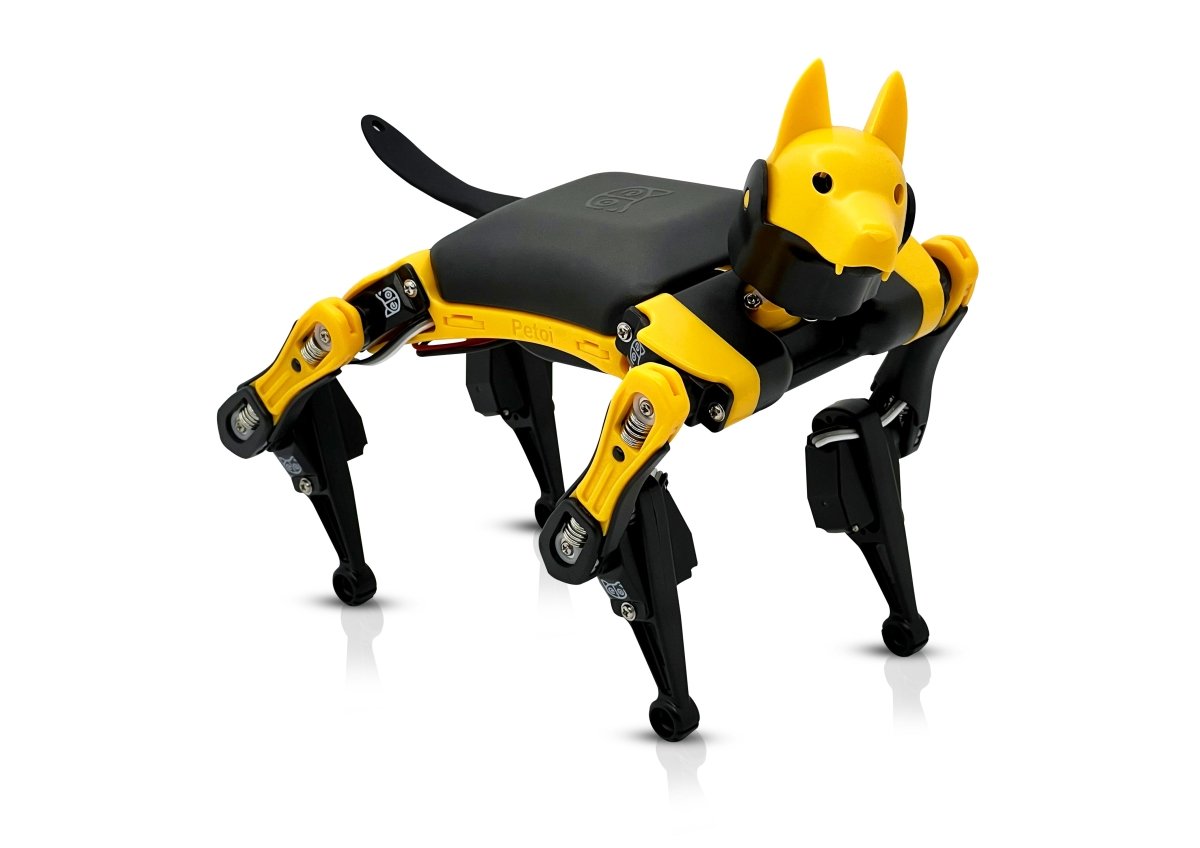
OpenCat is the open-source quadruped framework Petoi builds its products on — the palm-sized Bittle X dog, the laser-cut Nybble cat — and it occupies a sweet spot the registry’s kit lane otherwise lacks: a real framework (not chapter-code), small enough to read in a weekend.
The layers
Firmware. OpenCat’s C++ core runs on Petoi’s BiBoard (ESP32) and handles the hard part — gait generation, balance from the IMU, servo choreography — exposing everything above it as a terse serial protocol. ksit sits, kwkF walks forward, kbf backflips. The commands look cryptic until you realize they’re the whole API, learnable in an afternoon.
Language bindings. On top of serial: an official Python package, C++ examples, and Scratch/block-coding for classrooms — the same three-tier split as the education market it serves.
from PetoiRobot import *   # official petoi-opencat package
openPort()
sendSkillStr('ksit', 1)    # skill string + delay: the whole grammar
sendSkillStr('kbf', 2)     # backflip; supervision advised, dignity optional
Skill files. New behaviors are “skills” — arrays of joint angles and timing you compose in Petoi’s desktop app or by hand, then flash or stream. It’s keyframe animation for legs, and the community shares them the way older communities shared MIDI files.
Registry pick: Bittle X ($319 kit as of Aug 2026) is where OpenCat makes the most sense per euro — the full case sits in the recommendation box below.
What the docs tell you
Petoi’s documentation is tiered: unbox-and-play, then block coding, then serial protocol, then firmware modification, with the calibration ritual (every legged kit’s rite of passage) well covered. The GitHub repo is active and the community forum answers real questions. What the framework doesn’t offer: simulation — there’s no MuJoCo loop here; you tune skills on the physical robot, which is charming and occasionally chiropractic.
The registry’s read
OpenCat is the strongest framework in the sub-$400 kit lane — more structured than Freenove’s chapter-code, less demanding than Pollen’s RL pipeline. It’s also the rare stack whose maker sells through a real affiliate-supporting store and a curriculum business, which the support-status tracker reads as longevity signal. Full hardware verdict: Bittle X review; stack comparisons: Freenove report.
Your first mod (no experience required)
OpenCat’s desktop app makes the first mod a drawing exercise, not a coding one: compose a two-pose skill. In Petoi’s app, open the skill composer, pose the robot’s joints on screen for frame one (say, sitting with a paw up), frame two (paw down), set the timing, and save it as your own skill — a wave, named after whoever demanded it.
Trigger it from the app. That’s it: you’ve authored robot behavior with keyframes, the same way animators work.
What you need: the built Bittle, Petoi’s free desktop app, 15 minutes. You did it when: the robot performs a trick that didn’t exist this morning. If it goes wrong: skills are files — delete yours, the factory tricks are untouched. The calibration ritual you did at assembly is the only thing worth protecting; the composer won’t touch it.
Sources: the OpenCat GitHub repository, Petoi’s official documentation site, and the petoi-opencat Python package listing — linked from the Bittle X source record.
Registry recommendations from this report
Crisp gaits, tiered docs from block-coding to firmware, and the framework's most complete hardware expression — buy it for OpenCat as much as for the backflips.
Read the review →The robots in this report
-
№ 0011 Kits
Petoi Bittle X
Canifer palmaris
IN STOCK
The 'I built my own robot dog' starter specimen.